


Rewards Arcade: Earn Cash
0.00.00 Reviews
App Specs
- Version
- 2.0.17
- Updated On
- License
- Free
- Downloads
- 10,000+
- Developer
- PIXELPRIZE LIMITED
- Categories
- Entertainment
- Platform
- Android
Screenshots
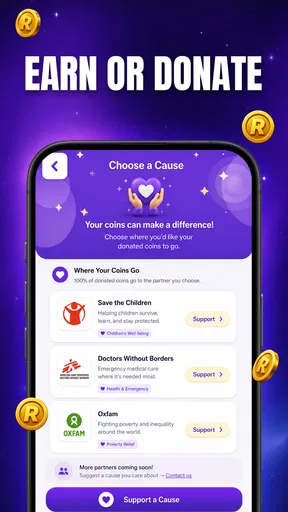
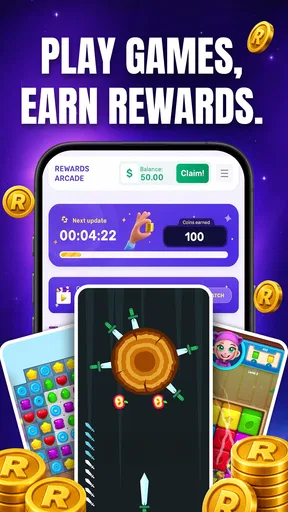

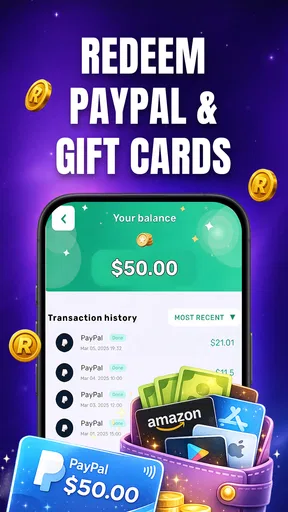
 Analysis by AppCompare
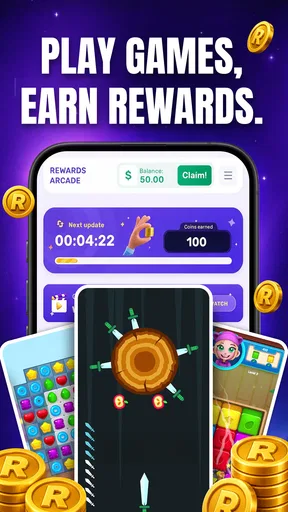
I approached Rewards Arcade: Earn Cash as a small entertainment app for short breaks rather than as a serious gaming platform. Its basic idea is easy to understand: open the app, play quick games, collect points, and work toward cash or gift-card redemptions. That simple loop makes it appealing when I want something light to do while waiting, but it also means the experience depends heavily on how clearly each step is presented and how much effort is required before a reward feels worthwhile.
The app is free and comes from PIXELPRIZE LIMITED. It is listed for mature audiences aged seventeen and over, and it runs on Android seven point one or later. The current version is 2.0.17, while its release date is August 24, 2026. It has passed the early discovery stage with more than ten thousand installs, although that number alone tells me very little about how comfortable it will be for a particular person to use.
How the interface feels during ordinary use
I focus on how the interface supports the app’s short-game loop, from choosing an activity to checking progress, because that sequence determines whether a quick break stays easy. I also consider a practical habit that helps keep points from overshadowing the play itself. That leads naturally to the question of when this format fits best.
Readability and navigation come first
For this kind of rewards app, navigation matters as much as the games themselves. I need to know where to start a game, where my points are shown, and how redemption works without having to guess. Rewards Arcade is best judged by that practical sequence: open it, find an activity, understand the result, and return to the rewards area. The less visual hunting involved, the more suitable it becomes for short, occasional sessions.
I found the concept easier to grasp than many entertainment apps that bury their main activity beneath several promotional panels. The quick-game format gives the product a clear purpose, but a rewards interface still needs careful wording. “Points,” “cash,” and “gift cards” are not interchangeable terms, so I paid attention to whether the screen made the difference understandable before treating the balance as something I could immediately spend.
My advice is to read the redemption screen before investing much time. That is not a criticism unique to this app; it is a sensible habit with any points-based service. Look for the available choices, the amount needed for each choice, and the exact action required to complete a redemption. A user who checks those details early can avoid spending a week collecting points toward an option that does not suit them.
The short-game structure also helps people who prefer a predictable starting point. I do not have to commit to a long story, learn a complicated control scheme, or remember a campaign objective. On the other hand, people who rely on very large text, strong contrast, or highly consistent layouts should inspect the screens carefully on their own device. I would not assume that a simple concept automatically means every label is effortless to read.
Worth Reading Before You Choose

Baby Panda World Brings Quick Play to Modern Phones, but Its Game Library Feels Busy

ESPN’s Live Game View Makes Following Close Games Easier

QuizzLand Review: A Good Fit for Short Trivia Breaks, Not Every Player

Basketball Stars: Multiplayer Is Fast, but Can It Recover When Matches Go Wrong?

WEBTOON Turns Phone Updates Into a Better Reading Routine

Link to Windows Runs on Shared Habits, Not Social Feeds
Small sessions are the natural workflow
I think the most sensible way to use Rewards Arcade is in deliberate, contained sessions. I would open it during a commute, play one or two suitable activities, check the balance, and close it. That approach keeps the app in its proper place: a casual diversion with a possible reward, not a replacement for paid work or a dependable source of income.
A useful habit is to separate playing from checking progress. If I constantly interrupt a game to inspect the balance, the experience becomes more tiring and the reward loop starts to dominate the entertainment. Checking after a short batch of activities gives me a clearer idea of whether the time feels worthwhile. This is especially helpful for users who find repeated counters, animations, or changing prompts distracting.
The app’s entertainment category is a good fit for people who want quick, low-commitment activities. It is less convincing for someone seeking deep gameplay, a social community, or a carefully developed single-player experience. The games are the means to the reward loop, so I would not download it expecting the variety or polish of a dedicated arcade collection.
Motor and sensory considerations
Quick games can be convenient for users with limited time, but “quick” does not automatically mean physically easy. A task that requires rapid taps, precise timing, repeated swipes, or sustained attention may be uncomfortable for someone with tremors, reduced dexterity, joint pain, or fatigue. Since the app’s central promise depends on interacting with games, the suitability of each activity matters more than the broad label of entertainment.
I would approach the games experimentally rather than forcing myself through every option. If one activity demands fast repeated input, I would move to another or stop the session instead of treating difficulty as a personal failure. This is one of the practical trade-offs of a rewards arcade: the user may be able to choose when to play, but may not be able to make every game equally comfortable.
Visual and sensory load deserve similar attention. Bright movement, changing scores, sound effects, or repeated reward feedback can make a short session feel busier than expected. Someone sensitive to motion or audio should use the device’s own volume and display controls and pause whenever the presentation becomes tiring. I would also avoid playing while walking, crossing roads, or managing another demanding task, because the app is designed to hold attention even when the individual activity seems simple.
Users who depend on a screen reader, switch access, magnification, voice control, or other assistive tools should test the complete path rather than only the opening screen. The important question is not merely whether the app launches, but whether a person can select a game, understand the points outcome, navigate back, and reach the redemption area with their preferred setup. I would not describe Rewards Arcade as universally accessible without that personal check.
Situational access in real life
The clearest everyday use case is a waiting period that is long enough for a few short activities but too brief for a film or a full game session. I can imagine opening it while waiting for an appointment, choosing a quick activity, and leaving when my name is called. That works because the app does not ask me to remember a complicated plot or preserve a long chain of decisions.
It is also suitable for people who enjoy a small sense of progress from spare moments. Seeing points accumulate can make idle time feel organized, provided the user keeps expectations realistic. I would treat the reward as a bonus attached to casual entertainment, not as payment for every minute spent. That mindset prevents the balance from becoming a source of pressure.
Situational access becomes weaker when the phone is being used in a noisy, crowded, or unstable environment. A bus ride with poor concentration, a dim room, or a weak grip can make precise play more difficult. The app may be available at those times, but availability is not the same as comfort. I would choose a seated, safe moment whenever a game needs visual focus or repeated touch input.
For people sharing a device, the rewards side also deserves caution. I would make sure the correct account and redemption destination are being used before spending time on the app. A points balance has practical value only when the person playing can follow it from the game screen to the intended reward. This is a small workflow detail, but it can matter more than the novelty of the games.
Where Rewards Arcade fits beside usual alternatives
Compared with a standard free arcade game, Rewards Arcade offers an extra motivation: points that can be exchanged for cash or gift cards. That may make ordinary spare-time play feel more purposeful. The compromise is that I am no longer evaluating it only by controls, graphics, or fun. I also have to consider how understandable the points system is and whether the time spent feels fair in relation to the available redemption choices.
Compared with a survey or cashback service, the app is likely to appeal more to someone who prefers interacting with games rather than answering questions or shopping through tracked offers. A survey-focused service may be better for a user who wants a clearly defined task with less hand movement. A conventional arcade title may be better for someone who wants uninterrupted play and does not want reward balances, redemption steps, or mature-age restrictions to shape the experience.
That comparison helps clarify who should skip it. If the main goal is reliable earnings, I would choose a service designed around transparent paid tasks rather than an entertainment app. If the main goal is accessible, deep gaming, I would look at a dedicated title with controls and settings built around that purpose. Rewards Arcade makes the most sense for a person who already enjoys brief games and sees rewards as an optional extra.
Remaining barriers and points of friction
The biggest limitation is the uncertainty that naturally surrounds any points-to-reward loop from a user’s point of view. A balance can look encouraging while still requiring more time than expected before a useful redemption becomes available. That is why I would record the starting balance, note how much progress comes from a normal session, and reassess after several sessions rather than judging the app from its first few minutes.
Another barrier is the mature seventeen-plus age rating. It narrows the audience and means I would not recommend the app to younger family members simply because the games appear casual. Parents and guardians should treat the age label as a real boundary when deciding whether it belongs on a shared device.
The reward promise can also change the emotional tone of play. A person who enjoys casual games may begin feeling obliged to continue because points are accumulating. I would set a time limit before starting and stop when the activity stops being enjoyable. This is particularly important for users who are prone to repetitive routines, fatigue, or frustration with progress bars.
Accessibility remains a personal evaluation rather than a conclusion I would make from the app’s category. The practical test is whether the text, touch targets, game timing, feedback, and redemption flow work with the user’s own needs. If a person needs guaranteed compatibility with a particular assistive setup, I would recommend testing that setup immediately and keeping expectations cautious until the entire journey works smoothly.
There is also a difference between being able to use an app and being able to use it comfortably. Someone may technically complete a game with magnification or voice control but find the repeated adjustments too slow for the reward to justify the effort. That distinction is easy to miss in a quick trial, so I would evaluate not only completion but also fatigue, concentration, and whether the process remains manageable after several sessions.
Who I would recommend it to
I would recommend Rewards Arcade to adults who like short games, want a free entertainment option, and are comfortable treating points as a possible bonus rather than guaranteed income. It is a reasonable companion for waiting rooms, quiet breaks, and other moments when I want something more interactive than scrolling but less demanding than a full game.
I would be more selective for people with motor or sensory needs. The right person may find the short format manageable, especially when choosing comfortable activities and playing in a controlled setting. Another person may find rapid input, visual motion, or repeated reward prompts tiring. The only responsible recommendation is to test the actual games and the redemption journey with the individual’s normal device settings.
I would skip it if I dislike reward mechanics, need a predictable financial return, or want a polished arcade experience independent of points. I would also skip it if the seventeen-plus age rating is not appropriate for the intended user. In those cases, a regular free game or a clearly structured task-and-reward service would be a better match.
My inclusive verdict
Rewards Arcade has a clear appeal: it turns brief game sessions into progress toward cash or gift cards, without asking the user to pay to begin. The free entry point and quick format make it easy to try, and the fact that it is maintained by PIXELPRIZE LIMITED with a current version of 2.0.17 suggests an actively presented product rather than an abandoned download.
Still, I would keep the recommendation measured. The reward should remain secondary to comfort, clarity, and control over your time. Check the redemption path early, use short sessions, stop when the games become tiring, and test any assistive setup across the whole app rather than assuming that simple games are automatically accessible.
My final view is that this is a niche entertainment choice, not a universal rewards solution. For an adult who enjoys casual play and likes seeing small goals build during spare moments, it is worth trying. For anyone who needs guaranteed accessibility, dependable earnings, or substantial gameplay, another category will probably serve them better. Used with realistic expectations, Rewards Arcade can make waiting time a little more engaging while leaving the decision about continued use firmly in the user’s hands.
Pros
- Simple arcade games make it easy to start earning points.
- New users can usually understand the reward system quickly.
- Short play sessions suit users with limited free time.
- The app offers extra earning opportunities beyond basic gameplay.
- Reward progress can make casual gaming feel more purposeful.
Cons
- Cash-out requirements may take time to reach.
- Earnings are typically small compared with the time spent playing.
- Frequent ads can interrupt gameplay and reduce the overall enjoyment.
- Reward availability may vary by country or user account.
- Some offers may require personal information or third-party sign-ups.
FAQs for Rewards Arcade: Earn Cash
What is Rewards Arcade: Earn Cash, and how does it work?
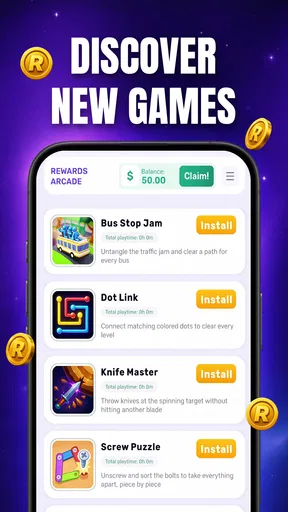
Rewards Arcade: Earn Cash is a rewards application that lets users earn points or credits by trying selected mobile games and completing in-app activities. After choosing an available offer, you generally need to install the game through the app and reach specific milestones, such as playing for a certain amount of time or completing levels. Rewards depend on the offers available in your region.
Can you really earn cash with Rewards Arcade: Earn Cash?
The app can provide redeemable rewards when eligible activities are completed correctly, but it should not be viewed as a reliable source of income. Earnings are usually modest and depend on the number of offers, your location, the required milestones, and whether tracking works properly. Before starting, read each offer’s conditions carefully because not every activity guarantees the same reward.
How do rewards and withdrawals work in the app?
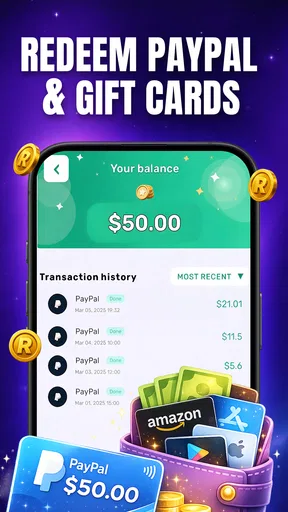
Rewards Arcade: Earn Cash typically uses an in-app balance that increases after qualifying game activity or other promotional tasks are verified. Available redemption methods, minimum withdrawal amounts, processing times, and eligibility requirements may vary by country and account. Check the current rewards or cash-out section inside the app before investing significant time, since payment options can change.
Why might a completed game offer not be credited?
An offer may fail to track if the game was installed previously, downloaded outside the app’s offer link, or played on an unsupported device. Advertising permissions, VPNs, ad blockers, private DNS tools, and switching devices can also interfere with attribution. To improve your chances, open the offer first, follow its instructions exactly, keep the app installed, and save screenshots of your progress.
Is Rewards Arcade: Earn Cash safe to use, and what should I check before installing it?
As with any rewards platform, review the app’s permissions, privacy policy, developer information, ratings, and recent user feedback before downloading. Avoid providing unnecessary sensitive information and never pay money to unlock a withdrawal. You should also confirm the minimum age, regional availability, data-collection practices, and whether the advertised reward method is supported in your country.


